Non-Fiction
Written by Sun Tzu, 544-496 BC
Google says it was first published in 1521 AD. The book (in some form or another) first showed up in the 5th century BC.
My edition published by Athenaeum Classics (e-book)
37 pages long, this may be abridged, as most other versions are just over 100 pages. Hard to tell with the e-books.
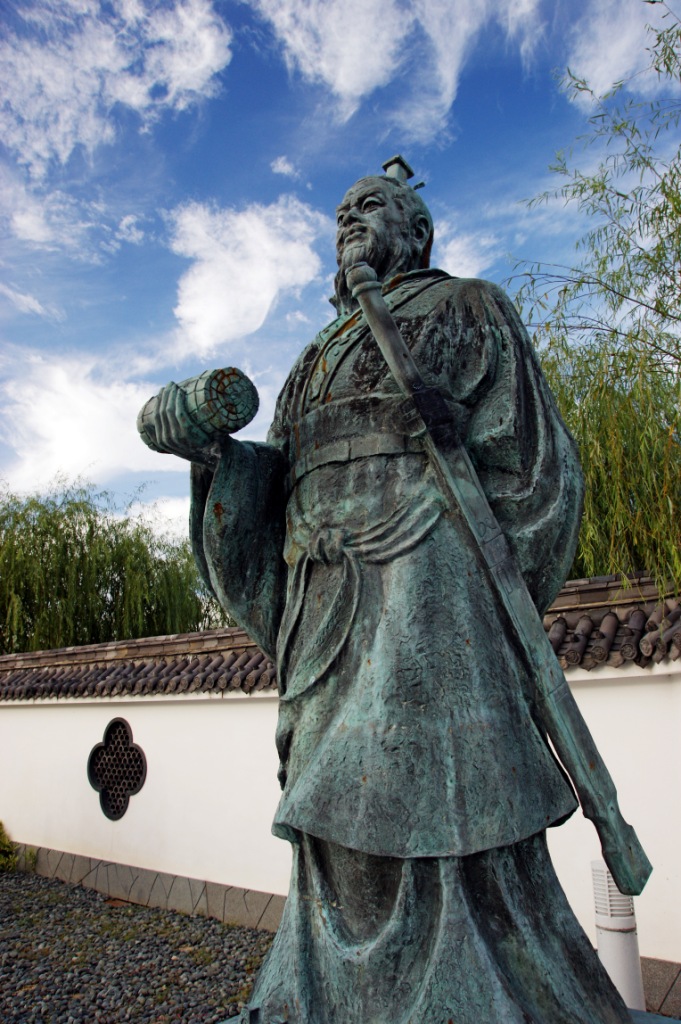 |
| Statue of Sun Tzu in Yurihama, Tottori, in Japan |
Description
This commonsense approach to warfare has been around for thousands of years and is one of the few books widely read in the East and West. Sun Tzu shares his experience on what works, and what doesn’t work, on the battlefield. When and how to engage, or not engage and how to treat your troops.
Sun Tzu
Sun Tzu was born Sun Wu, his name was later changed to Master Sun, Tzu meaning master or sir. He (probably) served under King Ho-lu of Wu during the late Spring and Autumn Period.
His son, Sun Bin, also went by Sun Tzu, and he also wrote a book called The Art of War. So, some speculate they may have been the same person.
Spring and Autumn Annals
Probably written by Confucius, 'spring and autumn' pretty much means 'year', these annals are a historic record covering from 722-481 BC. Because they are one of two year-by-year documents to survive this time period (the other being the Bamboo Annals), the time period is named after them.
My thoughts
I have been trying to read this book for over a year, but it kept getting pushed back. Mostly because there is a lot of confusion over which versions are abridged. I finally just took the free one from the Kindle Store and read that.
The Art of War is written in verses, like a Bible.
Chapter 3, verse 17 (my words). He will win who (1) knows when to fight and when not to fight. (2) knows how to handle both superior and inferior forces. (3) has the same spirit throughout all his ranks. (4) prepares himself and takes the enemy unprepared (5) is not interfered with by the sovereign.
Sun Tzu seems to have had several problems with sovereigns telling him what to do. "Don't listen to them" was repeated almost every chapter.
Unknowingly, I have occasionally quoted The Art of War, "Know thine enemy". I thought it was a Klingon proverb though...
The full saying (in my words) at the end of chapter 10 is "know yourself, know your enemy, know the elements and you will be victorious".
Quick Googling showed that Know Thine Enemy is a Star Trek novel about an alternate reality where Humans and Klingons are united against the Vulcans.
It is also the name of a Vampire Diaries episode.
Anyways...Sun Tzu also covers how to treat your soldiers. 9:43. "Therefore soldiers must be treated in the first instance with humanity but kept under control by means of iron discipline. This is a certain road to victory."
He was also against killing prisoners of war.
Most of what he says is common sense, but it is a short book, and knowing more common sense doesn't hurt. I found it interesting.
I honestly thought it was a Klingon proverb to.
ReplyDeleteIt does sound like something they would say, doesn't it?
Delete